
A glass speaker, piece by piece
You can see the kitchen wall through the Transparent Speaker. And if you crack a side panel moving it to another shelf, you can replace the glass and keep the speaker.
What you see through the glass
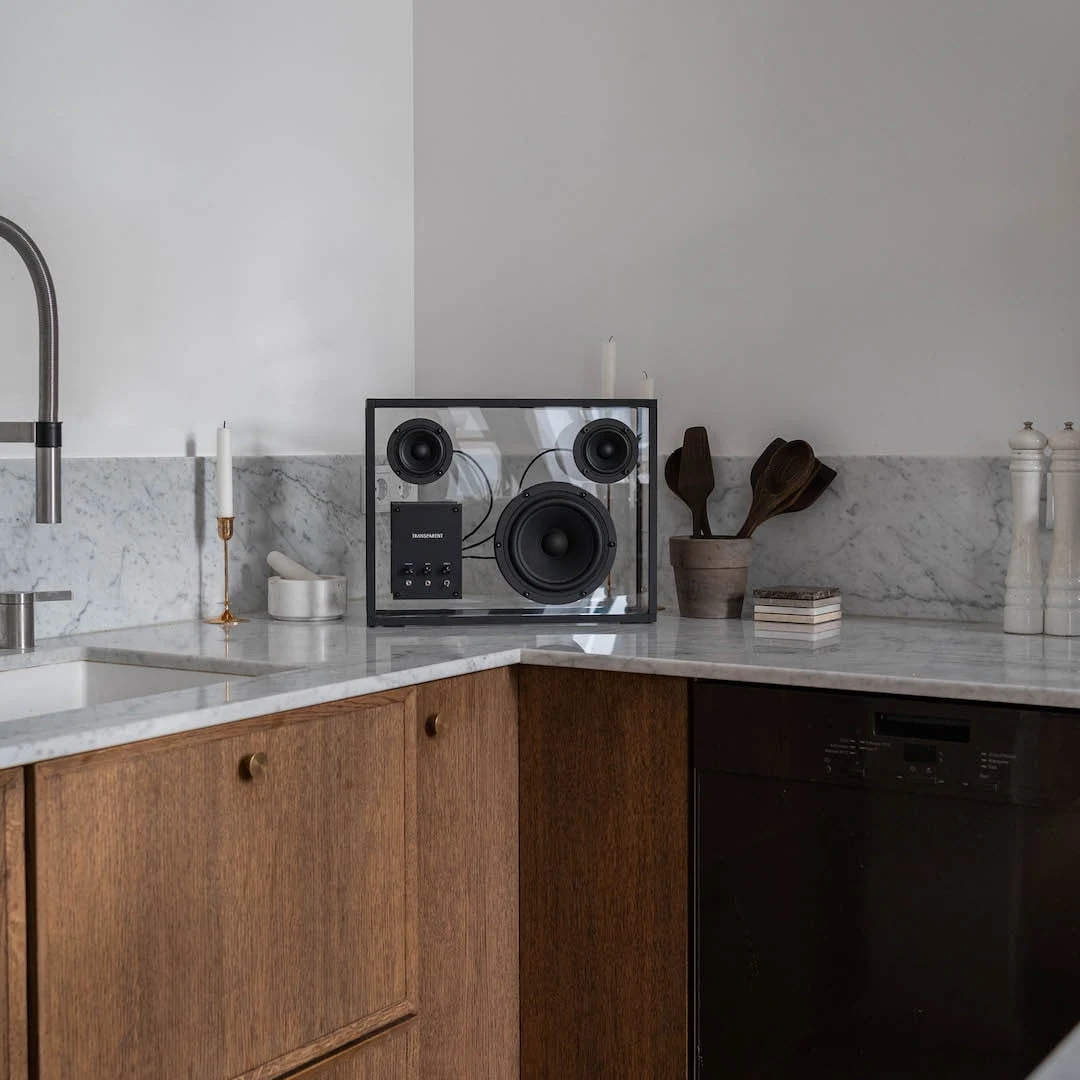
Look at the kitchen photograph and you can pick out three black circles. The two smaller ones are the left and right speakers. The large one handles low notes, like the bottom end of a double bass. The controls are in the lower left corner. On the full-size model you can turn up the volume, bring out the bass or soften the treble. These parts often sit behind a grille. Here you can walk up to the worktop and see what is making the sound.
A pane you can replace
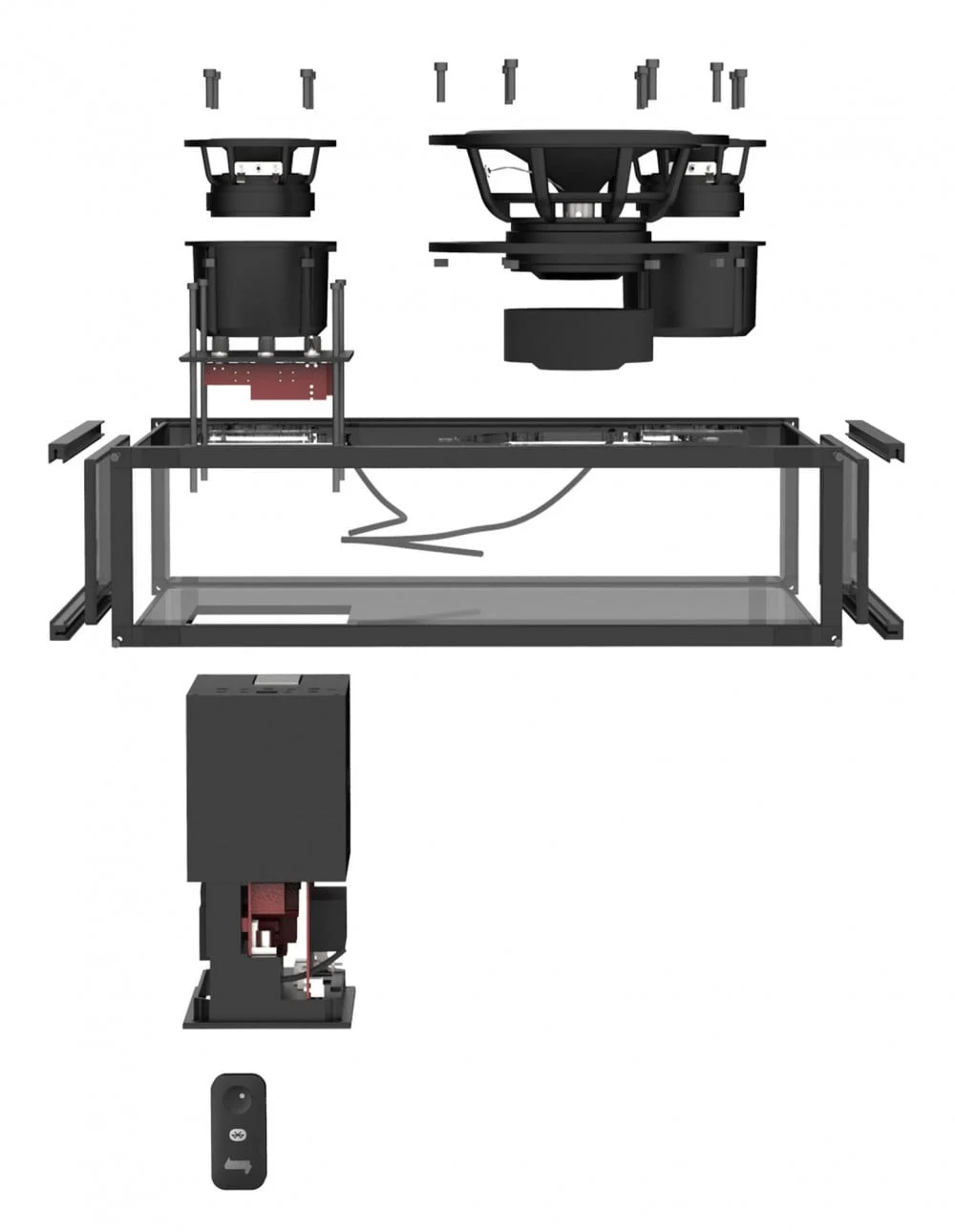
Picture a knock during a house move. A side pane breaks, but the aluminium frame and the speakers inside it are intact. Transparent lists a replacement for that pane, just as it does for the front and the top. The exploded drawing shows why this is possible. Each pane is a separate piece held by the frame. A repair starts with identifying which piece of glass was damaged and matching it to the model.
From your phone to an old music player
Pair your phone over Bluetooth and you can start a playlist while you cook. An older music player with a headphone socket can have a place here too. The full-size Transparent Speaker has a 3.5 mm audio input at the front and another at the back. The front one is handy if you only plug in a cable occasionally. Use the rear one to leave the cable out of sight when the player lives on the same shelf.
What changes when you add Wi-Fi
A phone can already send music over Bluetooth. To play it in sync in the kitchen and the living room later on, one option is to add a compatible Wi-Fi receiver and compatible equipment in the second room. The receiver handles the connection to the home network. The three drivers behind the glass still make the sound. Separating those jobs lets you change how music reaches the speaker and keep the parts you already enjoy listening to.
The gap on the shelf
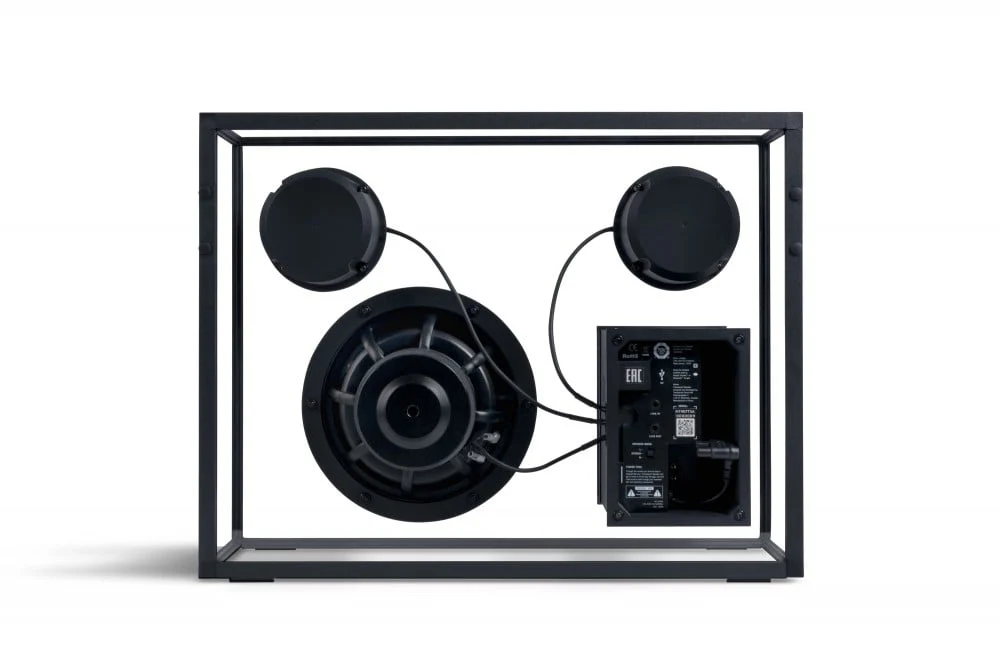
A shelf with 35 cm between its uprights will take the Small, which is 26.8 cm wide. The larger Transparent Speaker needs 43.1 cm. Check the depth too. The Small is 9.5 cm deep and the larger speaker 11.8 cm, with a little extra room needed for the cable. If both fit, you can see the difference through the glass. On the Small, the same two drivers carry the vocals and the bass line. The larger model adds a dedicated bass driver. It can reach lower notes, and a knob on the front lets you bring them forward or soften them.
Sources
- Modular System · Transparent
- Video guides · Transparent
- Small Transparent Speaker · Manual
- Speaker Guide · Transparent Speaker